Counter-Drone Capability Advisory
Independent Advice. The Right System. Not Just a System.
Introduction
We are not a manufacturer, a reseller or a distributor. We hold no product lines and earn nothing from what you buy. We are engaged to work out what your site actually requires, and to say so plainly — including when the answer is that you do not need a system yet.
The technologies referenced below are representative examples of counter-drone capabilities currently available within the market. Counter Drone Solutions does not advocate a single technology, manufacturer or sensor approach. Capability selection should be based on operational requirements, environmental conditions, legal considerations and validated threat assessment outcomes.
Why Independent Matters in This Market
The counter-drone market is fragmented, highly technical, and driven far more by vendor claims than by validated performance in the environment you operate in.
That matters more here than in most procurement, because the people selling the technology are usually the only people explaining it. There is rarely an independent voice in the room, and the specifications are difficult to test without deploying the equipment first.
We navigate that market on your behalf. Capability selection should follow operational requirements, environmental conditions, legal authority and a validated threat assessment — not product availability or vendor preference.
There is No Single Counter Drone Solution
No sensor, product or manufacturer provides complete coverage across every environment, drone type and threat scenario. Anyone who tells you otherwise has not deployed in your environment.
Effective capability requires multiple detection methods, integrated systems, a clear understanding of legal constraints, alignment to operational risk, and validated performance on your site rather than on a datasheet.
Without those things, systems underperform, create false confidence, or fail outright — usually at the moment they are first needed.
Layered Detection and Response
A layered approach improves detection probability, reduces reliance on any single sensor, and supports better decisions. The layers are complementary because each fails differently.
| Layer | What it does well | Where it falls short | |
|---|---|---|---|
| RF detection |
|
Blind to anything not transmitting. Congested RF environments reduce reliability. | |
| Optical detection and tracking | Visual confirmation and evidence you can act on or hand to an agency. | Shortest reach. Degraded by weather, light and background clutter. | |
| Radar | Tracks the drone regardless of control link, day or night. | Requires careful siting and tuning. Birds and clutter drive false positives. |
What You Will Be Offered, and Who Can Legally Use it
Counter-drone capability in Australia is shaped as much by legislation as by technology, and the equipment most often demonstrated to prospective buyers is the equipment those buyers are least able to lawfully operate.
Detecting, tracking and recording drone activity is generally available to organisations, subject to how equipment is configured, sited and used, and to privacy obligations.
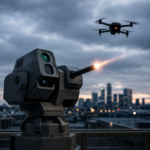
Actively interfering with a drone or its control link — RF or GNSS disruption, physical capture, or kinetic and intercept options — engages Commonwealth radio communications, telecommunications and aviation law, and in practice is confined to specified agencies acting under specified authorities.
We explain each of these categories below so you can recognise what is being pitched to you, understand what it does, and know whether your organisation could lawfully deploy it. In most commercial engagements, the answer is no — and the useful question becomes which agency you would be calling, and what you need to hand them.
This is general information and not legal advice.
How the Capability Gets Paid For
Counter-drone capability does not have to be a capital purchase, and treating it as one is a common and expensive default.
Permanent infrastructure suits some sites. Others are better served by temporary deployment, lease, subscription, managed service, or a staged pathway that builds capability as the threat picture justifies it. The right model depends on deployment duration, internal capability, governance requirements, budget cycle and whether you need something permanent or scalable.
The commercial model is worth deciding before you shortlist systems, because it changes which systems are viable. We advise on both sides of that decision, and we base it on assessment outcomes rather than what a vendor happens to have available.
Where This Leads
Capability advisory sits in the middle of our work, not at the start of it. Before we advise on systems, we would normally want to know what is actually flying over your site — which is what a preliminary or operational threat assessment is for.
From there we can support requirements development, capability design, procurement advice, implementation planning, validation and ongoing review.
If you are further along than that and already holding vendor proposals, we can review those independently instead.
Counter Drone Technology Options
Suitability depends on the site, threat profile, legal authority, operating environment and required outcome.
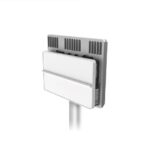
Detection – Generally available to organisations
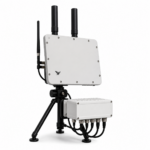
RF Detection
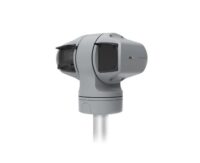
Optics Detection
Radar Tracking
Mitigation – Tight restricted and confined to specified agencies.
RF and GPS Jamming
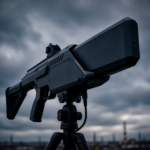
Physical Capture
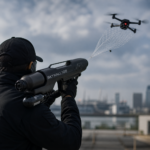
Kinetic
Our Operational Experience Counts