Drone Camera Tracking & Optical Counter-Drone Capability
Visual Confirmation and Tracking Within a Layered Counter-Drone Approach
Technology Considerations
The technologies referenced on this page are representative examples of optical counter-drone and drone camera tracking capability approaches currently available within the market. Counter Drone Solutions does not advocate a single technology, manufacturer or sensor approach. Capability selection should be based on operational requirements, environmental conditions, legal considerations and validated threat assessment outcomes.
Introduction
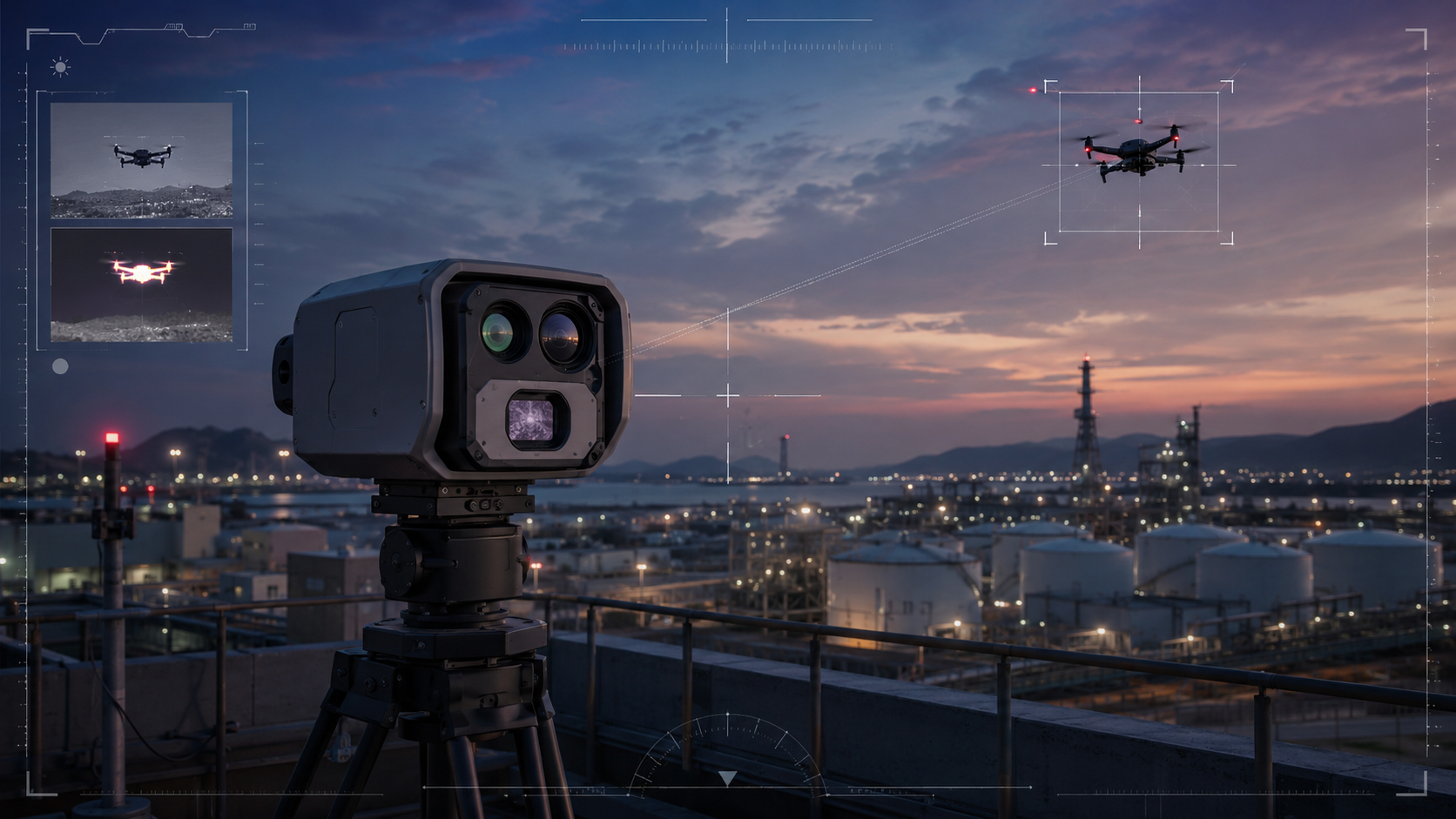
Drone camera tracking capability refers to the use of optical, thermal and automated tracking systems to assist with the detection, confirmation, classification and monitoring of drones. Optical systems may include electro-optical cameras, infrared or thermal sensors, pan-tilt tracking systems, automated video analytics and AI-supported classification tools. These systems are commonly used as part of a broader layered counter-drone capability to support visual confirmation, operator decision-making and incident assessment. Counter Drone Solutions provides independent advice on where drone camera tracking and optical capability may fit within a broader counter-drone strategy, including operational suitability, integration considerations, limitations and layered system planning.
Where Camera Tracking Fits
Optical and camera tracking systems are particularly useful where an organisation needs to visually confirm drone activity after an initial alert has been generated by another sensor layer.
A typical layered approach may involve:
• RF detection identifying potential drone activity,
• Radar detecting and tracking a low, slow or small object,
• Remote ID providing available identification information,
• Optical or thermal cameras supporting visual confirmation,
• Command-and-control software presenting information to operators,
• Response procedures guiding escalation and decision-making.
Operational Benefits
Optical and camera tracking capability can provide significant operational value because it gives operators visual context. Potential benefits may include:
• Visual confirmation of drone activity,
• Improved confidence in sensor alerts,
• Reduced false alarm impact,
• Tracking of drone movement,
• Identification of visible payload indicators,
• Support for incident reporting,
• Video evidence for post-incident review,
• Improved command-centre situational awareness, and
• Support for escalation and response decision-making.
This capability is particularly valuable where a client needs more than a detection alert and requires visual confirmation before operational action is taken.
Operational Limitations
Optical camera tracking systems should not be viewed as standalone counter-drone solutions. Performance may be influenced by:
• Line of sight,
• Distance to target,
• Drone size,
• Weather,
• Lighting conditions,
• Glare, fog, smoke or rain,
• Background clutter,
• Camera placement,
• Operator workload,
• Tracking speed,
• Sensor quality,
• Software integration, and
• Cueing from other detection layers.
Role in Layered Capability
Optical systems are often most effective when integrated with other detection layers that can cue the camera toward a likely drone location. Within a layered counter-drone system, optical capability may support visual confirmation, target tracking, incident recording and operator decision-making. No single sensor technology provides complete drone detection coverage in all environments.
Legal and Regulatory Considerations
Optical systems are generally less legally sensitive than active mitigation technologies because they do not interfere with the drone, pilot, control signal or navigation system. However, optical systems may still raise governance considerations relating to privacy, video recording, data retention, evidence handling, access controls and surveillance policy. Organisations should consider how visual data will be collected, stored, accessed, protected and used. Counter Drone Solutions does not provide legal advice. Clients should obtain independent legal and regulatory advice where required.