Integrated Drone Detection and Airspace Awareness
Technology Considerations
The technologies referenced below are representative examples of counter-drone capabilities currently available within the market. Counter Drone Solutions does not advocate a single technology, manufacturer or sensor approach. Technology selection should be based on operational requirements, environmental conditions, legal considerations and validated threat assessment outcomes.
Layered Drone Detection
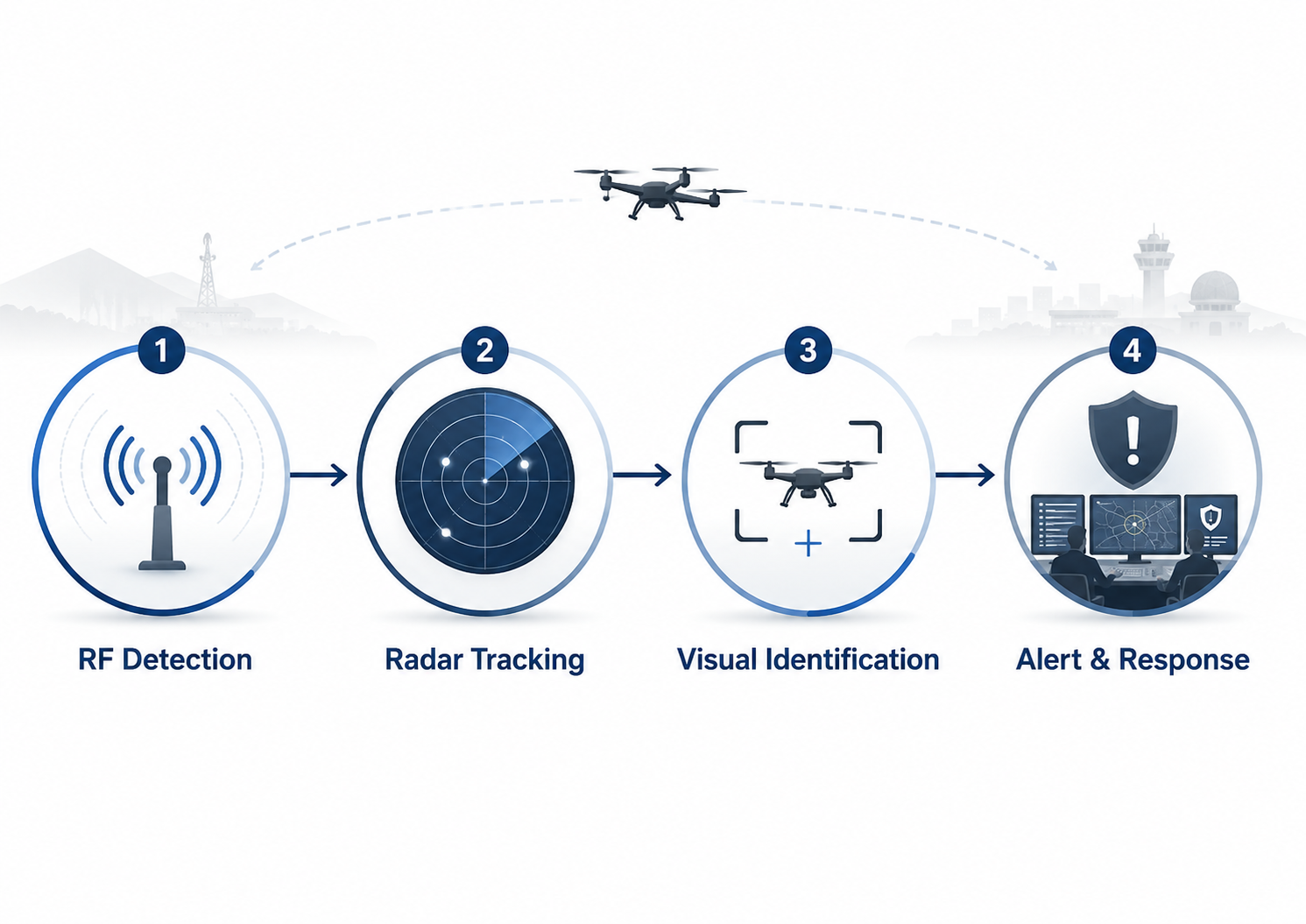
A layered detection capability may include:
• Radio frequency sensors to detect drone control links and telemetry,
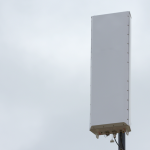
• Radar to detect drones that may not be visible through RF detection alone,
• Optical or thermal cameras to support confirmation and identification,
• Airspace awareness data to assist situational understanding,
• Software integration to combine alerts, tracks, operator information and incident records into a single operating picture.
RF
Radar
Mitigation
AirSight – AirGuard Software Interface
AirGuard is an airspace awareness and drone detection software platform designed to support real-time visualisation, alerting and incident management.
AirGuard can integrate with drone detection technologies such as RF sensors, radar and camera systems to help security teams understand drone activity, assess risk and coordinate an appropriate response.
Depending on the sensors and system configuration, this may include information such as drone location, flight path, pilot location, drone identification data, alert zones and incident history.
Capability Benefits
An AirSight-style integrated detection capability may assist with:
• Real-time drone detection and alerting,
• Improved airspace situational awareness,
• Integration of RF, radar, optical and other data sources,
• Configurable warning and alert zones,
• Incident management and reporting,
• Escalation workflows for security teams,
• Integration with existing security or command systems,
• Scalable deployment across different site types and risk profiles,
• Software-as-a-service delivery where suitable.
Operational Limitations
Drone detection systems are not universal and should be selected based on the operating environment, threat profile and required outcome. Key considerations may include:
• Site size, terrain and line-of-sight constraints,
• Urban RF noise and signal congestion,
• Drone type and operating mode,
• Sensor placement and coverage gaps,
• False alarms and alert thresholds,
• Integration with existing security systems,
• Data hosting, privacy and information security requirements,
• The need for trained operators and clear escalation procedures.
About AirSight
The AirSight manufacturer page describes AirGuard as a drone detection platform that can identify pilot location, flight path and telemetry data. Your page already describes AirGuard as a platform for real-time visualisation and mitigation of drone risk, but it has spelling and grammar issues.